Roofing Services
Emergency Roof Repair When Water Is Coming In
When water is getting into the house, the first job is to stop it and keep your family safe. The proper repair comes right after, once the roof is dry enough to work on.
- Licensed & InsuredResidential and commercial
- 25+ Years of ExperienceOn Lapeer County roofs
- Free InspectionsWritten estimates
- Licensed & Insured
- 25+ Years of Experience
- Residential & Commercial Roofing
- Free Inspections & Written Estimates
- Serving Lapeer County, Michigan
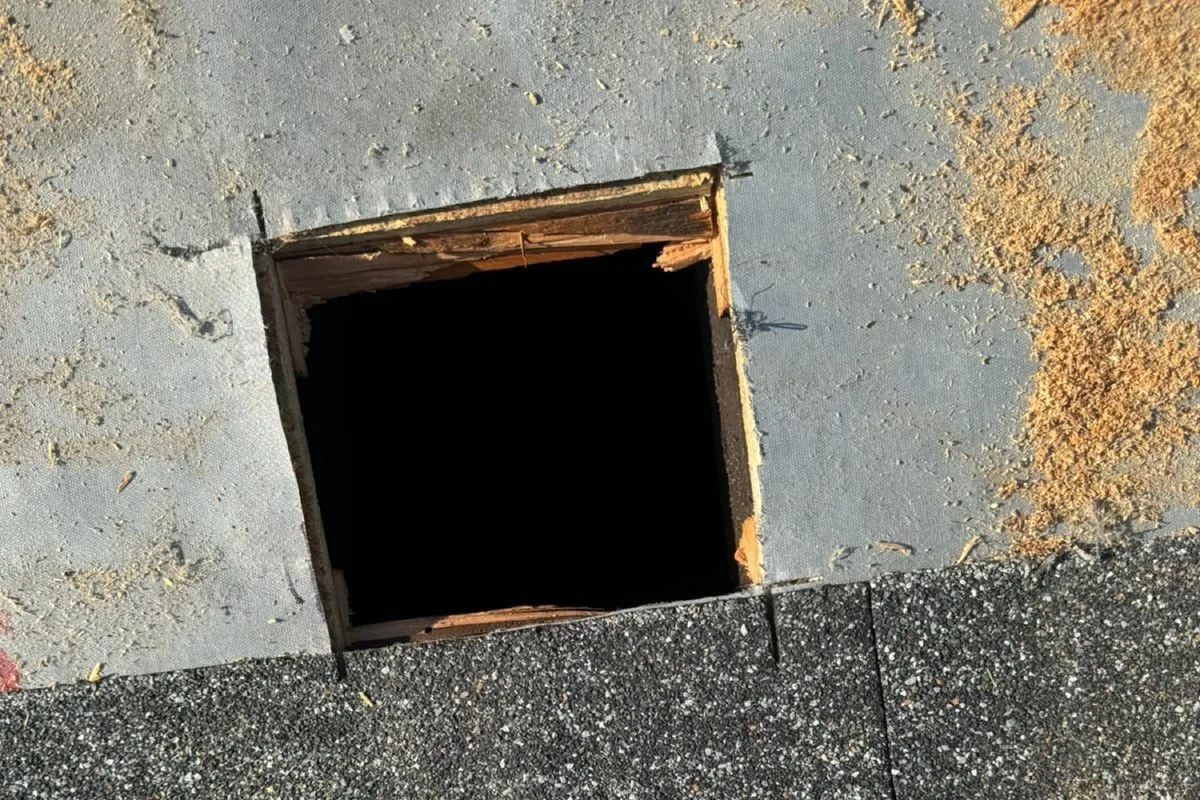
A roof rarely picks a convenient moment to fail. It is usually during a thunderstorm, in the middle of a thaw, or right after a limb drops onto the shingles. This page explains what we treat as an emergency, what you can do safely before we get there, and how the work unfolds from the first call to the finished repair.
Is this actually a roofing emergency?
Treat it as an emergency if water is actively entering the living space, the ceiling is sagging or bulging, a tree limb has punctured the roof, or shingles and decking are gone and rain is on the way. A slow stain that has not grown in weeks still needs attention, but it can usually wait for a scheduled inspection.
Other situations that call for quick action:
- Water dripping near light fixtures, outlets or ceiling fans
- An ice dam pushing meltwater under the shingles and into an exterior wall
- Chimney flashing torn loose after high wind
- A section of roof that looks lower than the rest when you view it from the yard
What can I safely do before you arrive?
Put buckets or a plastic bin under drips, move furniture, electronics and keepsakes out of the wet area, and lay down towels. If water is near a fixture or outlet and you can reach the breaker without stepping in water, switch that circuit off. Stay off the roof and out of a soaked attic.
A few more things that help:
- If a bubble of water forms in the ceiling paint, a small hole at its lowest point lets it drain into a bucket instead of spreading. Only do this if the ceiling is not sagging badly.
- Take photos and short videos of the water, the stains and anything damaged. Those pictures matter later.
- Keep children and pets away from wet floors and any ceiling that bows.
- Do not climb a ladder in wind, rain or ice. Wet shingles are slick, and damaged decking may not hold your weight.
How we handle an emergency call, in order
- A conversation first. We ask where water is appearing, what the weather did, and whether anything inside feels unsafe.
- An inside look. On arrival we check the ceiling, the attic if it can be entered safely, and the path the water is taking.
- Stopping the water. Depending on the opening, we either install secured emergency roof tarping over a larger hole or apply temporary roof sealing to a small failure.
- Documenting. We photograph the damage before and after the temporary work so you have a record.
- The real repair. Once conditions allow, we come back to replace damaged shingles, underlayment, flashing or decking, using materials that fit in with what is already on the house.
- A written estimate. You get the scope in writing, free, before permanent work begins.
Will the first visit fix my roof for good?
Usually not, and we will be upfront about that. The first visit is about stopping water and preventing further damage. Permanent work needs a dry roof, the right materials, and sometimes a closer look at decking or flashing that cannot be judged properly in a downpour. We schedule that repair as soon as conditions allow.
If what we find tells us a repair is not going to hold, for example widespread soft decking or a roof failing in many places at once, we will say so plainly and talk through your options rather than patching something that will leak again next spring. Once the water is stopped and the house is dry, we can replace the roof outright when that is the better investment.
Does homeowners insurance come into it?
Often it does, when the cause is a sudden event like wind, hail or a falling limb. We photograph and document the damage, write up a repair estimate, and can be there when the adjuster visits if you want us. You file the claim and talk with your insurer, and your policy decides what is covered.
Keep receipts for anything you spend to protect the house, like fans, tarps from the hardware store or a night away from home. Our insurance claims page explains where we can help and where the decisions belong to you and your insurance company.
Why Lapeer County roofs fail suddenly
Most emergency calls here trace back to a short list of causes. Summer storms rolling across open farmland near Imlay City and North Branch can strip shingles in a single gust. On wooded acreage around Hadley and Dryden, a heavy limb can come straight through the decking. And in late winter, homes in Lapeer and across the county see ice dams that back meltwater under shingles until it appears on an interior wall.
Get the water stopped
Tell us what you are seeing and where it is showing up. We will talk you through the next steps and get someone out to stop the leak.
Why choose Lapeer County Roofing
Licensed and insured
Lapeer County Roofing is licensed and insured for residential and commercial roofing work across Lapeer County.
25+ years of experience
Our crew brings 25+ years of experience to every repair, replacement and inspection on homes and commercial buildings.
Free inspection with photos
We inspect the whole roof, photograph what we find and show you the damage before we recommend anything.
A written estimate
You get the price in writing before work starts, with no cost and no obligation for the inspection.
Adjuster meetings on request
For storm claims we document the damage and can meet your insurance adjuster on site if you ask us to.
Cleanup when we finish
We pick up nails, old shingles and debris before we leave, so your yard and driveway are clear.
Emergency Roof Repair: common questions
Should I go up on the roof to check the damage myself?
No. Wet or icy shingles are slippery, storm-damaged decking can give way, and wind makes ladders dangerous. Look from the ground with binoculars, check the attic only if there is solid flooring to stand on, and take photos from a safe spot. Leave the roof itself to us once the weather lets up enough to work.
Can you come out while it is still raining?
We can often get water under control during rain by tarping or sealing from a safe position, but we will not put anyone on a roof in lightning or dangerous wind. In those conditions we may start inside, protecting ceilings and tracing the leak, then work on the roof as soon as it is safe.
Is a stained ceiling with no dripping an emergency?
Usually not, though it should not be ignored. A dry stain means water got in at some point, and it may return with the next heavy rain or thaw. Mark the edge of the stain with a pencil and watch it. If it grows, softens or starts dripping, call us sooner; otherwise book a free inspection.
What happens to wet insulation and drywall?
Soaked attic insulation loses much of its value and can hold moisture against the ceiling, so it often needs to be pulled and replaced once the roof is sealed. Drywall that sagged or softened usually needs cutting out. We focus on the roof itself and will point out interior damage so you can document it for your insurer.
Should I run fans or a dehumidifier after a leak?
Yes, once water has stopped coming in. Moving air and a dehumidifier help dry carpets, drywall and framing before mold gets a foothold. Keep fans away from standing water near outlets, and do not run electrical equipment on a circuit you switched off for safety until an electrician has checked it.
Need emergency roof repair?
Tell us what happened and where. We’ll take a look and give you a free estimate.