Roofing Services
Emergency Roof Tarping That Stays Put in the Wind
A tarp is a short-term shield for an opening in your roof. Done right, it rides out wind and rain until the permanent repair. Done wrong, it flaps loose and lets in more water than before.
- Licensed & InsuredResidential and commercial
- 25+ Years of ExperienceOn Lapeer County roofs
- Free InspectionsWritten estimates
- Licensed & Insured
- 25+ Years of Experience
- Residential & Commercial Roofing
- Free Inspections & Written Estimates
- Serving Lapeer County, Michigan
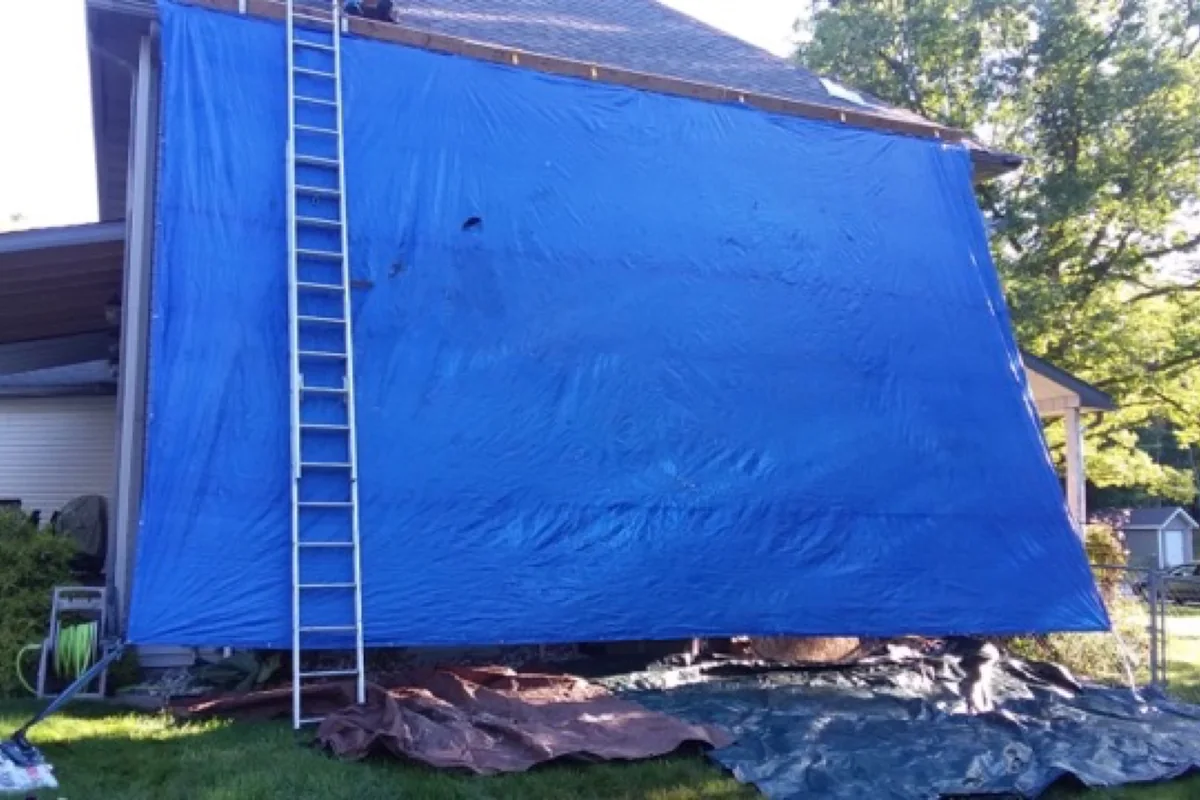
Plenty of blue tarps go up after a Michigan thunderstorm. A good share of them are shredded or gone a week later, usually because they were held down with a few bricks or nailed straight through the plastic into the shingles. Our approach is slower and more deliberate, because the goal is a cover that keeps working through the next storm too.
When does a roof need a tarp instead of a quick seal?
A tarp is the right call when the opening is larger than a few shingles: a limb puncture, a torn-off section, exposed decking, or damage across several courses. Small, defined gaps such as a cracked vent boot or one lifted tab are better handled with sealant, which we cover on our temporary roof sealing page.
Tarping also makes sense when the weather will not allow permanent work for a while, such as a stretch of rain or a hard freeze, or when an insurance adjuster still needs to see the damage before repairs begin.
How we install a tarp so the wind cannot get under it
- Clear and check. We remove loose debris and broken pieces, then make sure the decking around the opening will hold a person and fasteners.
- Size it generously. The tarp should extend well past the damage on every side. Where possible, it runs up and over the ridge so water sheds down the far slope instead of running under the top edge.
- Batten the edges. We roll the tarp edges around wood strips and fasten the strips, rather than punching nails through bare plastic. Battens spread the load so gusts cannot rip the material at each fastener.
- Mind the fastener holes. Fasteners go where they will be covered or repaired later, in a pattern that keeps penetrations to a minimum.
- Shape it to shed water. We pull the tarp taut with no pockets, so rain runs off instead of pooling and dragging the cover down.
- Photograph everything. Pictures of the damage before the tarp goes on, and of the finished installation, go to you for your records.
Why is a loose do-it-yourself tarp risky?
A tarp that is not fastened well catches wind like a sail. It can tear loose, pull shingles off with it, and drag fasteners through the decking, creating new openings. Water also runs under an upper edge that stops below the ridge. And the climb itself, on wet, storm-damaged shingles, carries a real risk of a fall.
If you already put a tarp up yourself to get through the night, that is understandable. Leave it in place, stay off the roof, and let us check and re-secure it when we arrive.
How long can a tarp stay on?
Think in weeks, not seasons. A well-secured tarp buys time to document the damage, meet the adjuster and schedule the permanent repair, but sunlight breaks down the material and wind works at the fasteners. Plan on the permanent repair as soon as the weather and your claim allow, especially ahead of winter snow load.
A tarp does not fix anything. It does not replace missing underlayment, restore flashing, or dry out water already inside walls. It simply keeps more rain out. Once the cause is clear, storm damage repair or emergency roof repair is what actually closes the roof. When the storm left too little sound roof to save, roof replacement becomes the permanent answer the tarp was holding space for.
Will my insurance company want to see the tarp?
Many policies ask homeowners to take reasonable steps to prevent further damage, and a tarp is often one of them. Keep the photos we give you, the invoice for the tarping, and receipts for anything else you bought to protect the house. Your policy and adjuster decide what is reimbursed, so ask your insurer directly.
We can be on site during the adjuster's visit if you would like. See how we help with insurance claims for the full picture of what we do and what stays with you.
Where tarping calls come from in the county
Tarping work tends to follow trees and open ground. Homes on wooded lots near Hadley and Metamora take limb strikes that leave real holes. Lake homes in Otter Lake catch wind coming across the water, and farmhouses outside Almont have little to slow a straight-line gust. Long driveways and roofs set back from the road also mean damage sometimes goes unnoticed until water appears inside, which makes a solid temporary cover even more important.
Get a secured tarp on your roof
Tell us roughly how big the opening is and what caused it, and send photos taken from the ground if you have them.
Why choose Lapeer County Roofing
Licensed and insured
Lapeer County Roofing is licensed and insured for residential and commercial roofing work across Lapeer County.
25+ years of experience
Our crew brings 25+ years of experience to every repair, replacement and inspection on homes and commercial buildings.
Free inspection with photos
We inspect the whole roof, photograph what we find and show you the damage before we recommend anything.
A written estimate
You get the price in writing before work starts, with no cost and no obligation for the inspection.
Adjuster meetings on request
For storm claims we document the damage and can meet your insurance adjuster on site if you ask us to.
Cleanup when we finish
We pick up nails, old shingles and debris before we leave, so your yard and driveway are clear.
Emergency Roof Tarping: common questions
What kind of tarp do you use?
We use heavy, reinforced tarps sized to the damage, not the thin lightweight kind that tears at the grommets in the first strong gust. The material matters, but how it is battened and fastened matters more. Even a heavy tarp will fail if the edges are left free for wind to catch.
Will the tarp damage my shingles?
Some fastener holes are unavoidable, but we place them where they will be covered or repaired during the permanent work, and battens keep the tarp from chafing. The damaged area is getting repaired anyway. A tarp that rips loose in wind does far more harm to surrounding shingles than one that was fastened carefully.
Can a tarp go on in winter with snow on the roof?
Sometimes. We may need to clear snow and ice from the work area first, and frozen conditions make footing and fastening harder, so safety decides what is possible on a given day. In deep winter a tarp may need to stay longer before permanent work can be done, which makes a careful installation matter even more.
Should I take pictures before the tarp goes on?
Yes, if you can do it safely from the ground or from inside. Photograph the opening, the debris, any fallen limb and the water inside. We also take our own photos before and after tarping. Damage that gets covered without a record is harder to show an adjuster later.
Do I need to remove the tree limb before you tarp?
No, and please do not try to pull a limb off the roof yourself. A large branch can be holding broken decking in place, and moving it can open a bigger hole or bring it down on you. If a limb is too large to move safely by hand, a tree service may need to remove it before the tarp goes on.
Need emergency roof tarping?
Tell us what happened and where. We’ll take a look and give you a free estimate.