Roofing Services
Temporary Roof Sealing for Small Leaks in Lapeer County
Some roof problems are small enough to close with sealant and too urgent to leave open until the full repair. Temporary sealing fills that gap. It is a stopgap, and we treat it like one.
- Licensed & InsuredResidential and commercial
- 25+ Years of ExperienceOn Lapeer County roofs
- Free InspectionsWritten estimates
- Licensed & Insured
- 25+ Years of Experience
- Residential & Commercial Roofing
- Free Inspections & Written Estimates
- Serving Lapeer County, Michigan
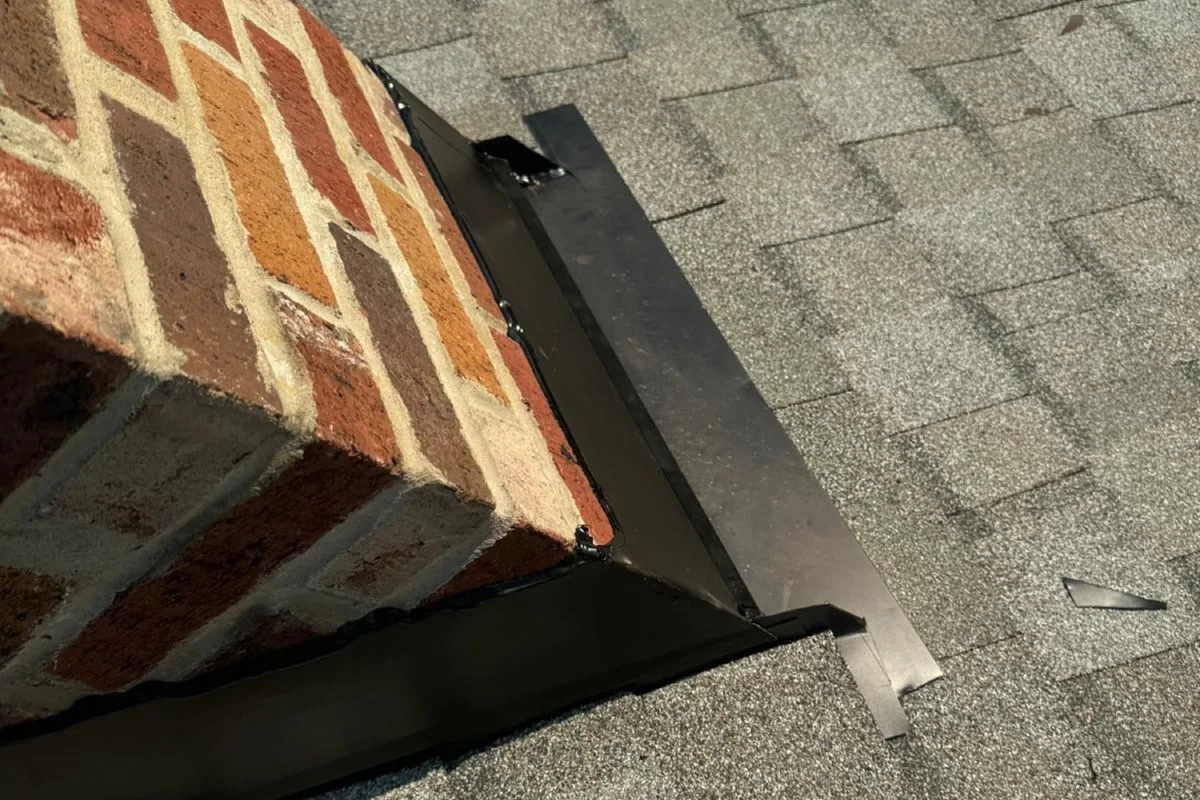
Not every leak needs a tarp. When water is coming in through a narrow, well-defined spot, such as a single shingle that lifted in the wind or the rubber collar around a vent pipe that split, a careful seal can stop the drip with far less disruption to the roof. The key words are careful and temporary.
What kinds of problems can be sealed?
Sealing works on small, clearly located openings: a lifted or unsealed shingle tab, a nail pop, a cracked plumbing vent boot, a gap where flashing has pulled away from a chimney or wall, or a worn seal around a skylight or roof vent. It is not meant for holes, missing sections or broad areas of damage.
It also helps with wind-lifted tabs that are still intact. If the shingle is whole and only its adhesive strip let go, we can re-bond it so the next gust does not finish the job.
Sealing or tarping: how do we decide?
We decide by the size and shape of the opening. If we can see exactly where water enters and the surrounding shingles and decking are sound, sealant is usually enough. If decking is exposed, shingles are missing, or the damage is spread across a slope, we use a fastened tarp instead, because sealant cannot bridge an open gap.
A quick comparison:
- Sealing: one shingle, a boot, a short run of flashing; a minimal footprint on the roof
- Tarping: punctures, torn-away sections, several damaged courses; see emergency roof tarping
Some jobs need both, with a small seal at a flashing joint and a tarp over a damaged section nearby.
How we seal a problem spot
- Find the real entry point. Sealing the wrong spot wastes time and hides evidence, so we confirm the source first. If it is unclear, a roof leak inspection comes before any sealant.
- Dry and clean the surface. Sealant does not bond to wet, dusty or granule-covered surfaces, so we clear debris and dry the area as well as conditions allow.
- Choose the right product. Roofing sealants differ in how they handle asphalt, metal, rubber, cold and UV. We match the product to the materials and the season.
- Apply it so water still sheds. Sealant goes where it closes the gap without damming water or gluing down parts that need to move.
- Re-seat lifted shingles. A wind-lifted tab can often be pressed back down and sealed to the course below.
- Record it. We photograph the problem and the temporary fix and include both in your written estimate for the permanent repair.
Why can't sealant be the permanent fix?
Sealant ages faster than the roof around it. Sun, heat and freeze-thaw cycles harden and crack it, and it does nothing about the underlying cause, whether that is a split boot, rusted flashing or a shingle that has lost its grip. Left in place too long, it can fail quietly and let water back in.
We are wary of roofs that have been fixed with layer after layer of tar. Old patches trap moisture, hide rot and make the proper repair harder. Farmhouses around North Branch and older homes in Lapeer sometimes carry years of these patches. When we seal something, it is so the permanent repair can happen on a dry roof soon after, not so it can be forgotten. And when years of tar patches have hidden decking too far gone to fix, we can strip it all off and handle the roof replacement ourselves.
Does temporary sealing matter for an insurance claim?
It can. If storm damage opened the gap, sealing it is a reasonable step to limit further damage, which many policies ask of homeowners. We photograph the damage before we seal it so the evidence is not lost. Keep that record and the invoice. Whether the repair is covered is between you and your insurer.
Read more about what we do on insurance claims. If the damage came from wind or hail, the follow-up work usually falls under storm damage repair.
Where small seals come up around the county
Wind off the water at Otter Lake works at shingle edges on the exposed sides of lake homes. In Dryden and other wooded spots, shaded roofs stay damp longer, which wears out sealant strips and boots sooner. East-county homes near Imlay City see tabs lifted by wind crossing the open fields. Each of these can often be closed with a seal while the permanent fix is scheduled.
Get a small leak closed
Describe the spot as well as you can: near a pipe, by the chimney, a shingle you saw flapping.
Why choose Lapeer County Roofing
Licensed and insured
Lapeer County Roofing is licensed and insured for residential and commercial roofing work across Lapeer County.
25+ years of experience
Our crew brings 25+ years of experience to every repair, replacement and inspection on homes and commercial buildings.
Free inspection with photos
We inspect the whole roof, photograph what we find and show you the damage before we recommend anything.
A written estimate
You get the price in writing before work starts, with no cost and no obligation for the inspection.
Adjuster meetings on request
For storm claims we document the damage and can meet your insurance adjuster on site if you ask us to.
Cleanup when we finish
We pick up nails, old shingles and debris before we leave, so your yard and driveway are clear.
Temporary Roof Sealing: common questions
How long does a temporary roof seal last?
It varies with the product, the surface and the weather, so we do not promise a timeline. Treat it as protection for the short wait before a proper repair, not something to rely on through several seasons. Sun exposure and a hard winter both shorten its life, and a seal you cannot see from the ground can fail unnoticed.
Can I just use a tube of roofing caulk myself?
We understand the temptation, but we advise against climbing up yourself, especially on a wet or steep roof. Sealant on the wrong spot can trap water and make the real source harder to find. Most store-bought tubes also need a dry, clean surface to bond, which is hard to achieve during a leak.
Can you seal a roof while it is raining?
Most sealants need a reasonably dry surface to bond properly, so active rain limits what we can do. In a downpour, a tarp is often the better short-term answer, with sealing done once the area dries. In light rain we can sometimes dry a small spot enough to work, depending on the product and the location.
Will sealant ruin the look of my roof?
A temporary seal is placed for function, not looks, but we keep it neat and as small as the job allows. Because it is temporary, the area gets properly repaired afterward with matching shingles or new flashing, and the visible sealant goes away with the damaged material it was protecting.
Why did my vent pipe boot crack?
The rubber collar around a plumbing vent is exposed to full sun, heat in summer and hard cold in winter. Over time it dries out, shrinks and splits around the pipe. A cracked boot is one of the most common small leaks we seal, and it is a simple permanent repair afterward.
Need temporary roof sealing?
Tell us what happened and where. We’ll take a look and give you a free estimate.